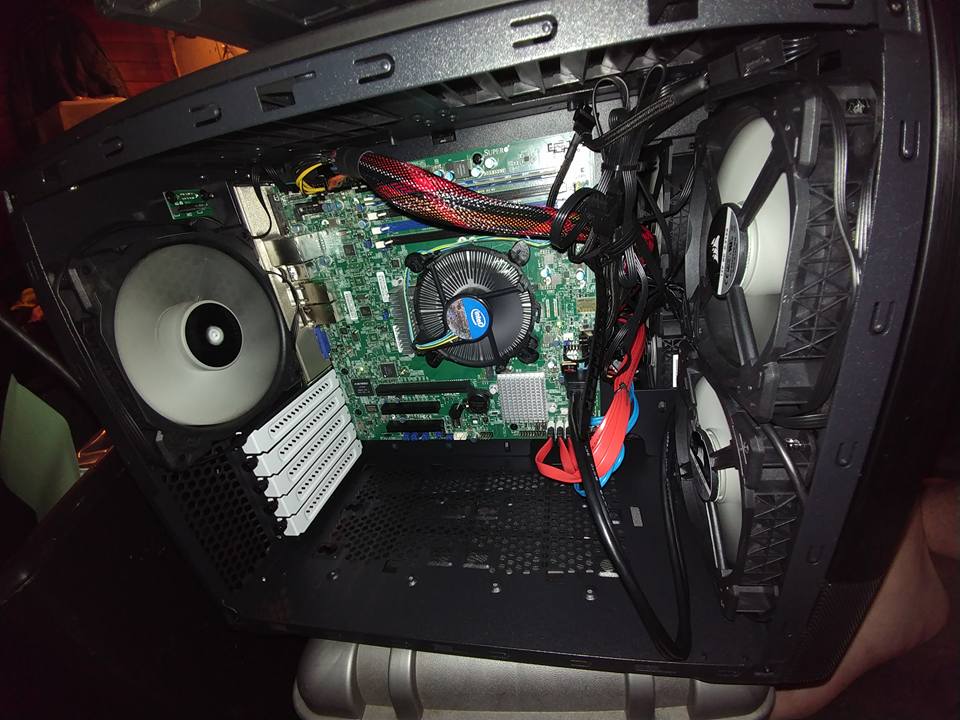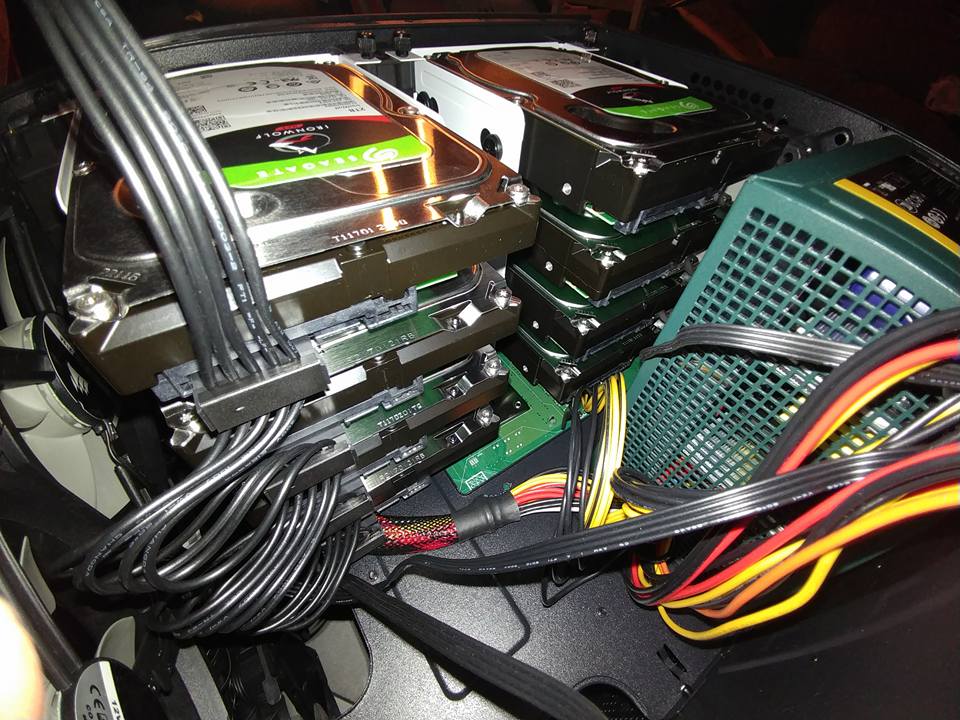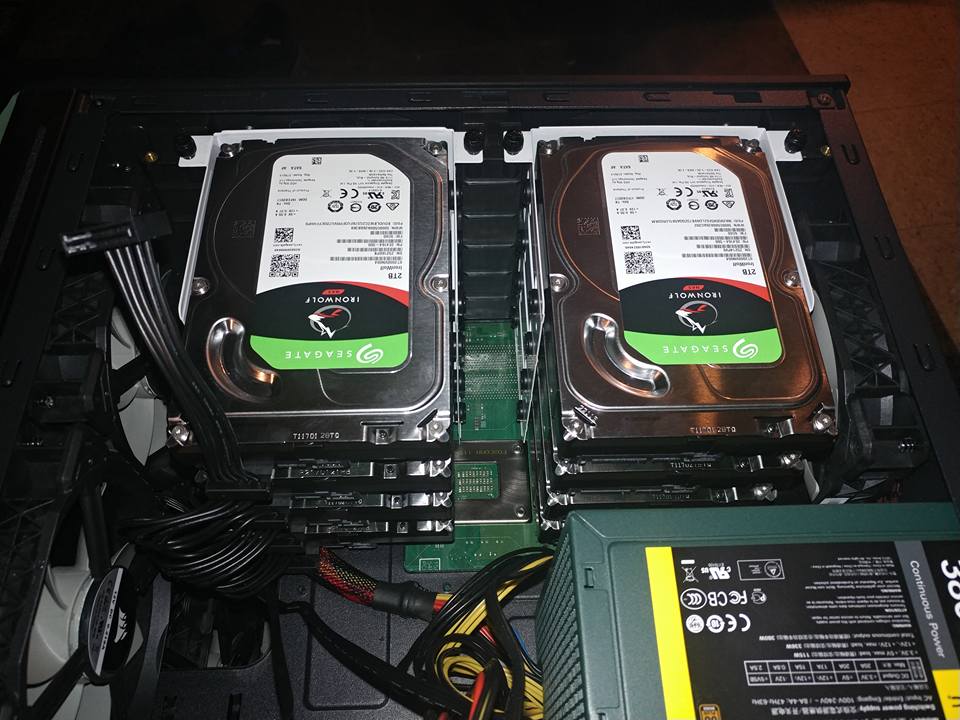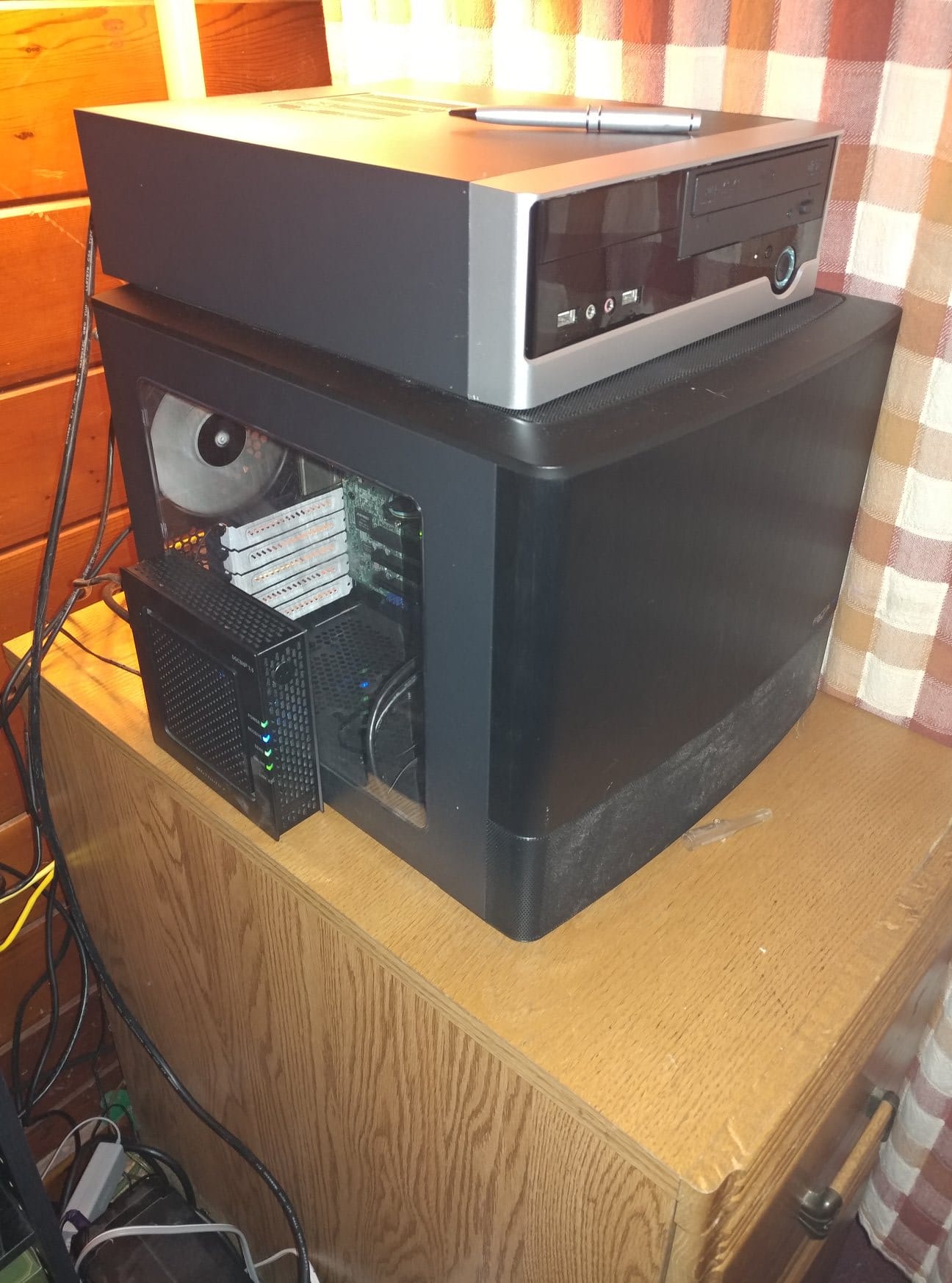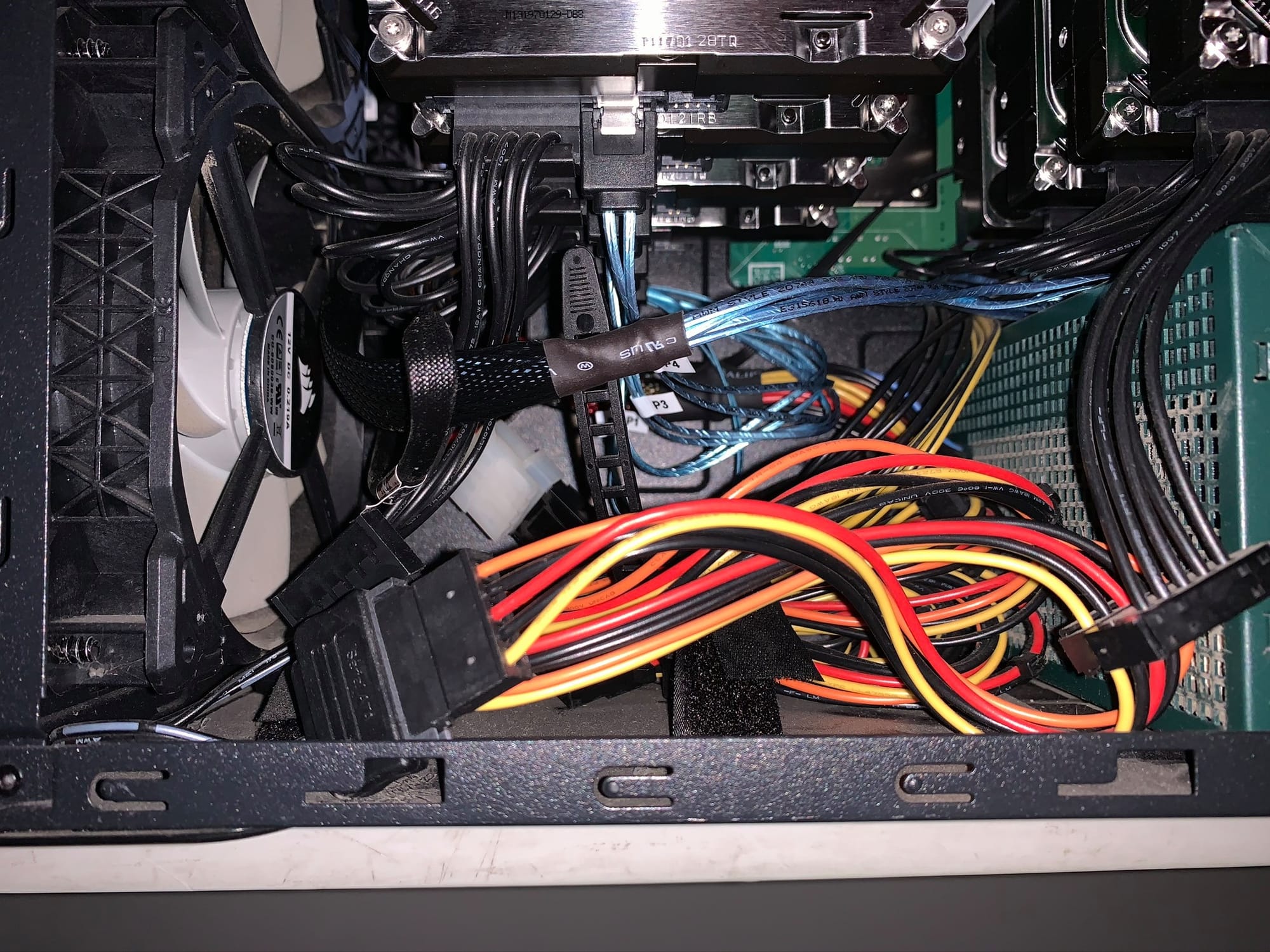
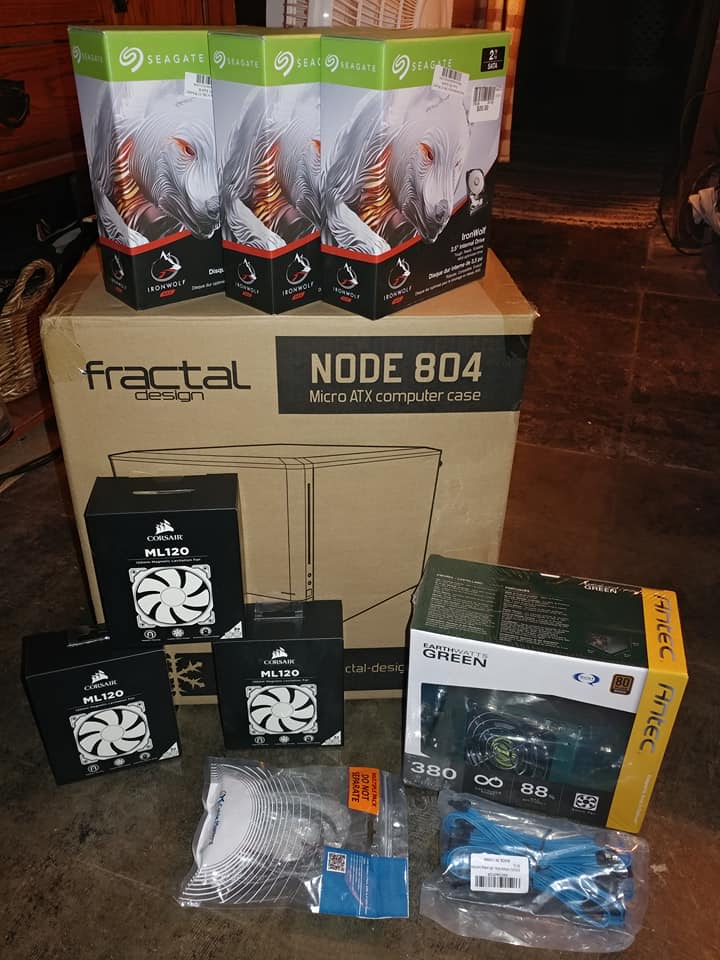
My foray into home-labbing began in 2017. Prior to this, all I've ever had were gaming PCs and a laptop. After having some issues with three prior years' worth of tax returns, I received them all at once. I've always wanted to build a NAS, and now was my chance!
So, into the research I dove. Not knowing much, I didn't really know what to look for. Cases? OS? Hard drives? Power Supply? I was pretty familiar with consumer hardware, sockets and chipsets, GPUs, etc. I could probably build a PC in my sleep. But NAS hardware? This was unfamiliar territory.
The OS
I ended up settling on FreeNAS. Mostly, well, because it was free. I didn't really know what was out there, and I don't remember how I came to this conclusion, but FreeNAS it was! Based on my Facebook post from 2017, the specific version was FreeNAS 11.3-U1.
OS? Check! ✅
The case
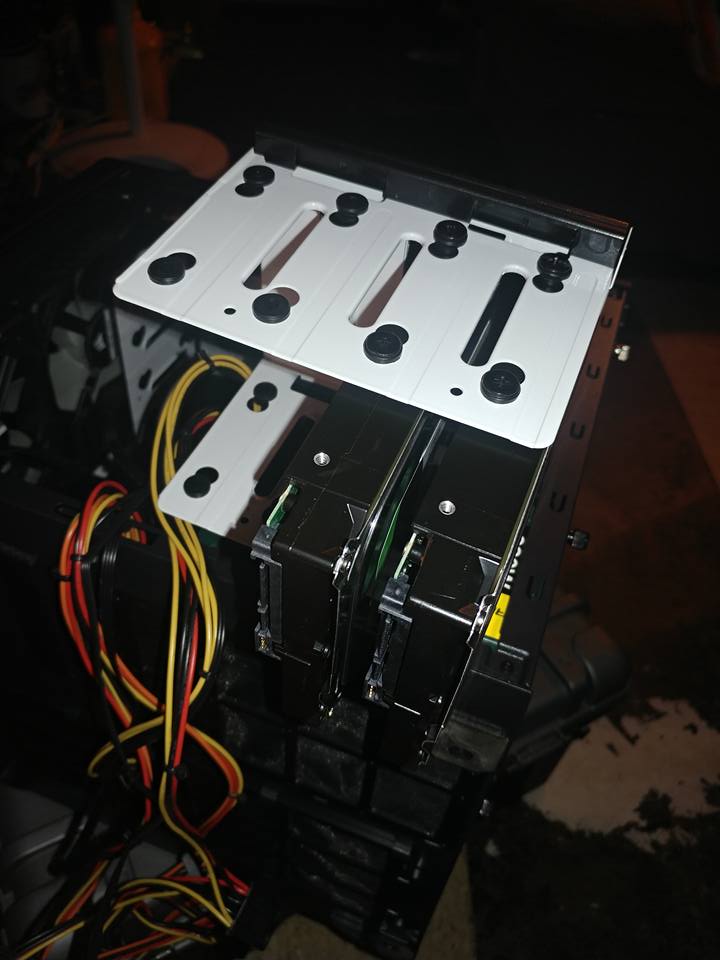
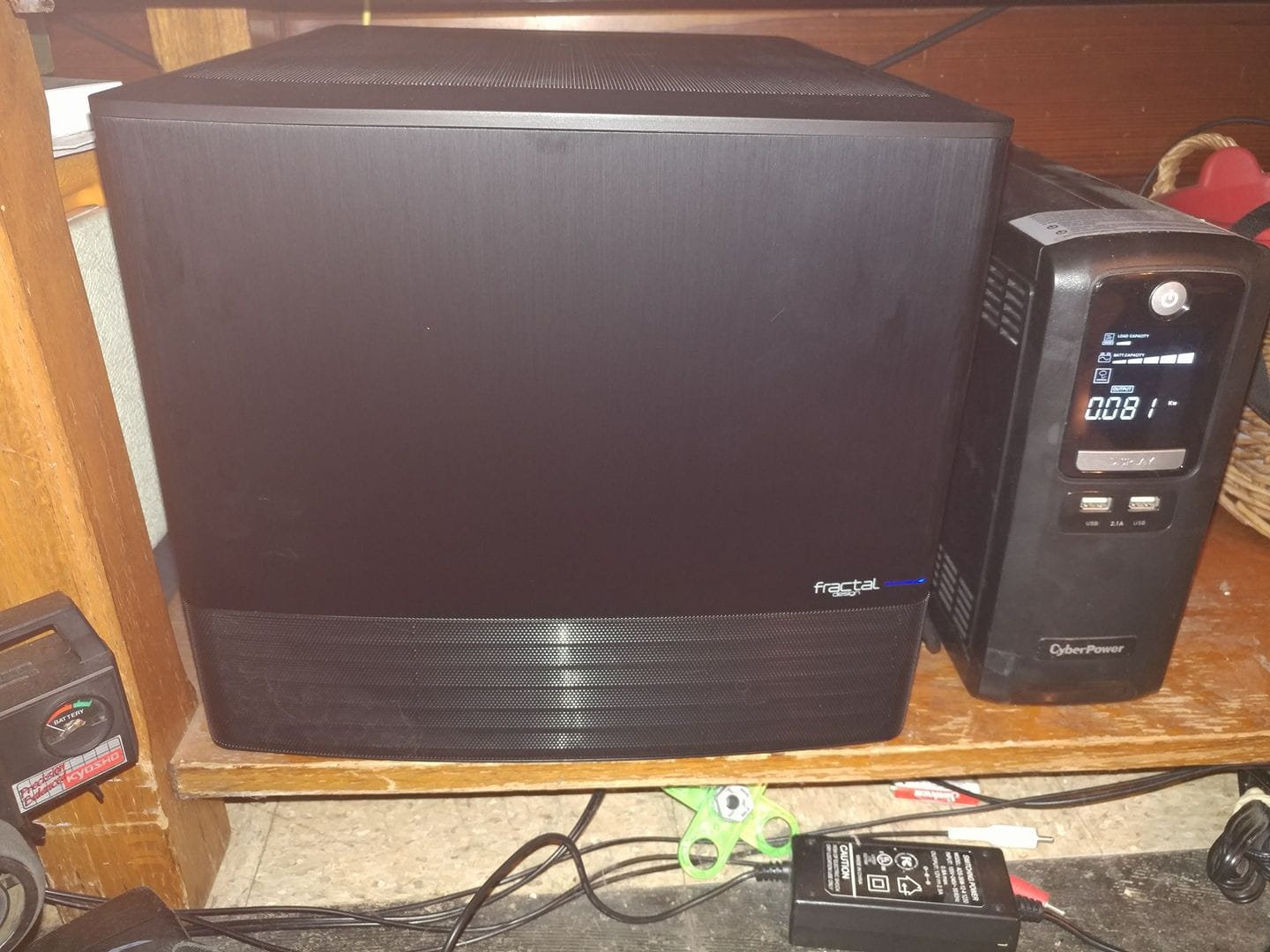
Space was a constraint at the time, as I was living with my girlfriend and her parents. I also knew I wanted it to hold plenty of hard drives. (Duh). I also wanted it to look good. I ended up settling on the Fractal Node 804. This was quite a sexy case, especially for the space it took up. It even had a cool position for a slot-load optical drive, which I never ended up utilizing.
Motherboard & CPU
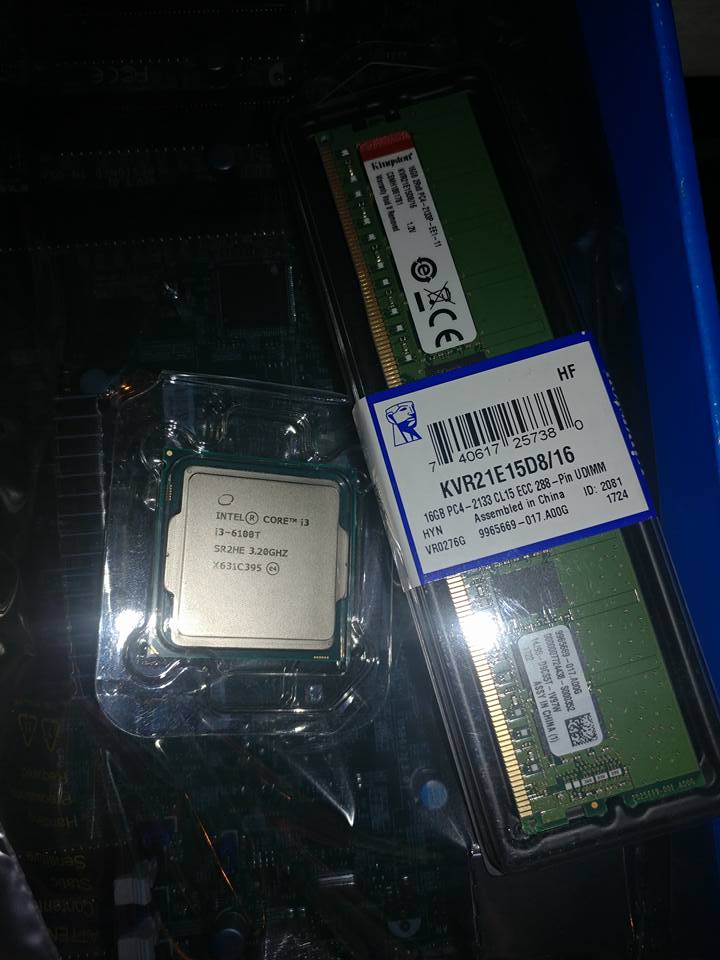
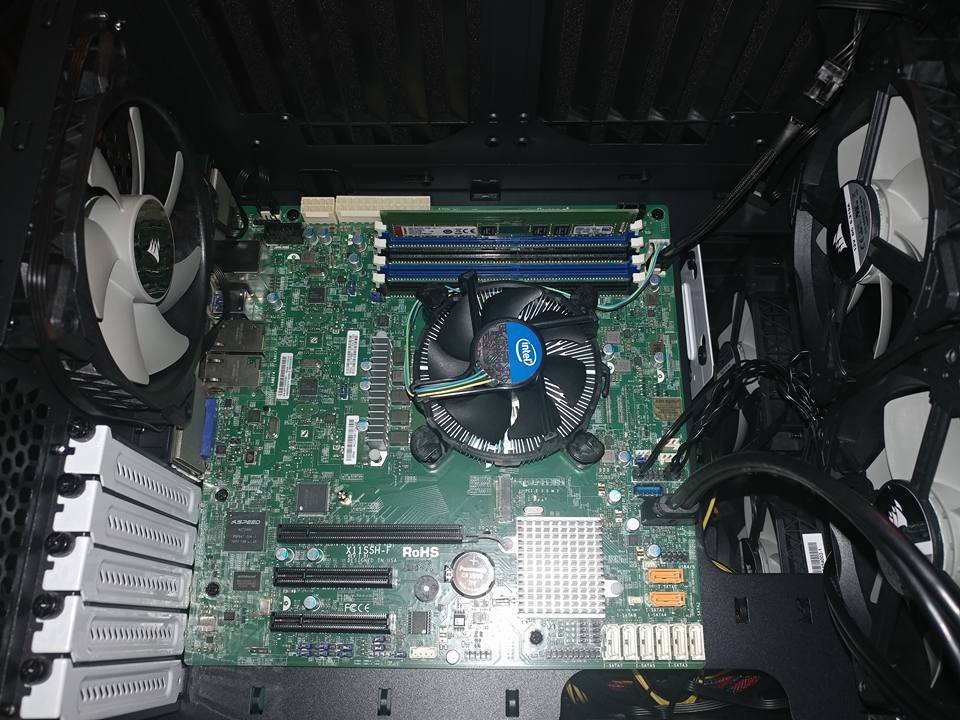
The board is probably something I overspent on slightly at the time, but it turned out to be a great purchase. Deep in the rabbit-hole of research into FreeNAS, people always swore on ECC RAM. So this meant a server board, but I also wanted it to sip power. I ended up going with a SuperMicro MBD-X11SSH-F-O. This turned out to be a great purchase, and served as the base for this NAS for many years. It's still running 24/7, but as my OPNsense router. As for the CPU, I settled on an Intel Core i3 6100T. At the time, it was more power than I needed, and it sipped power. AND it also supported ECC RAM.
RAM
There's not much to explain here. I just went with a single 16gb stick of Kingston DDR4 ECC RAM.
Power Supply
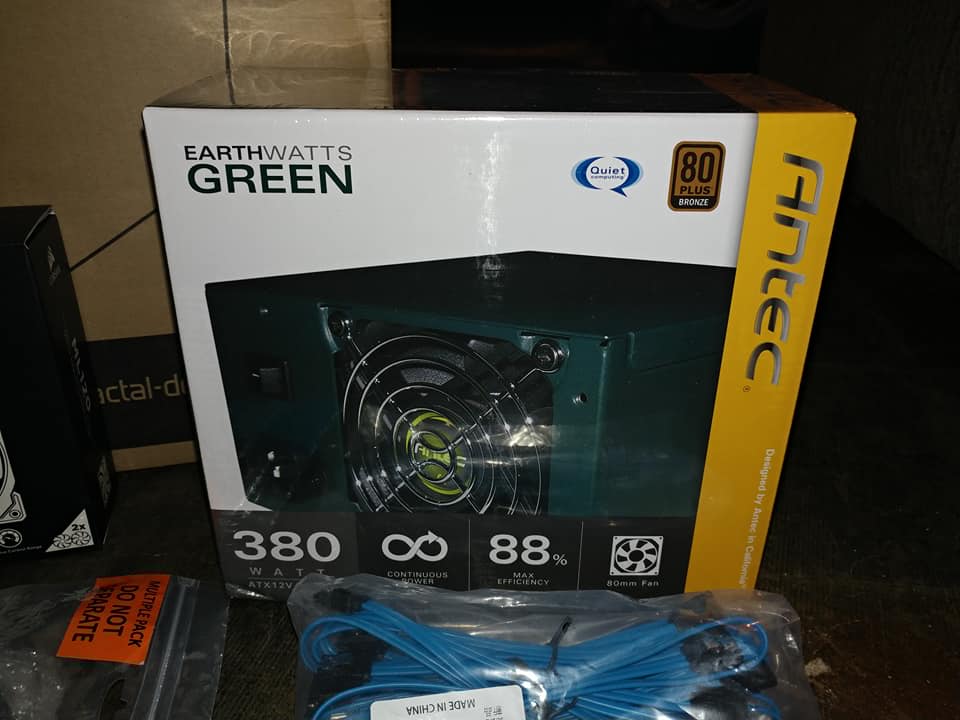
I honestly didn't know at the time what kind of power hard drives consume, especially on power up. This is probably one thing I under-specced on, especially when considering room for growth, or more power-hungry hardware. For this I went with an Antec Earthwatts 380w. This ended up working out great though and even powered ten drives and two SSDs. This one is still in use, although not 24/7. I even had it powering a dual-socket Xeon E5 v3 platform that I got on Craigslist, although I had to use an EPS 8-pin splitter to power both CPUs, which is NOT recommended.
Fans
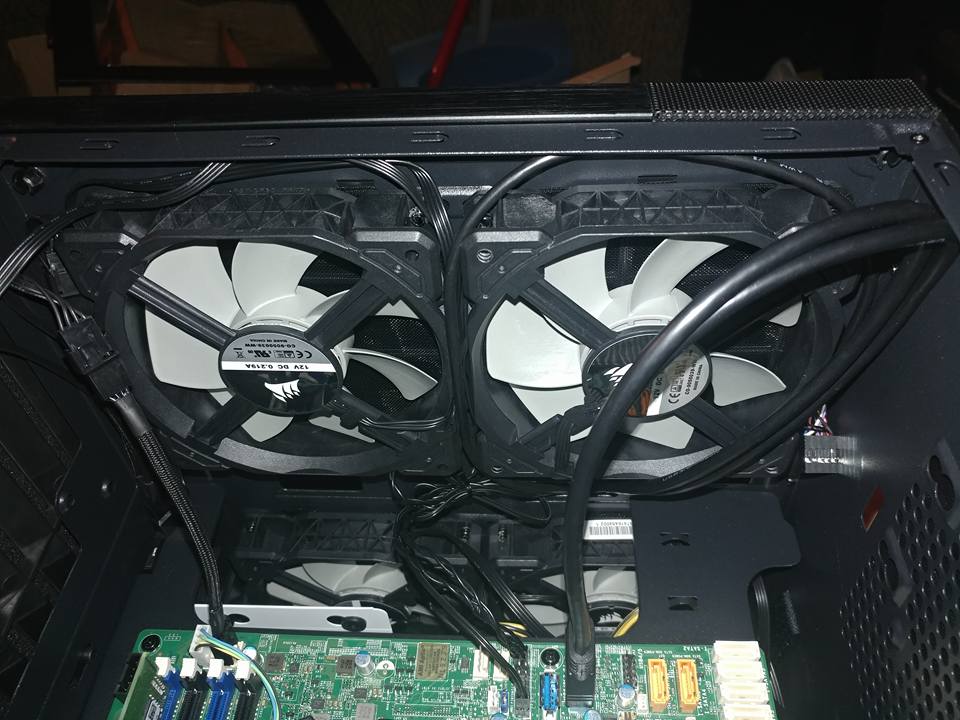
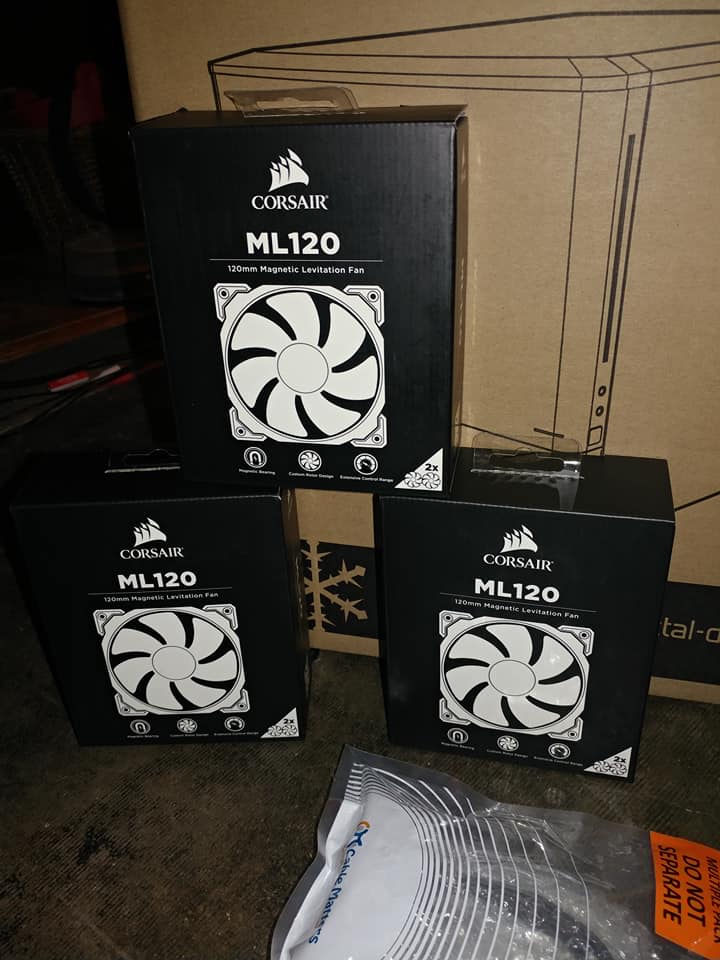
Fans are definitely something I overspent on and is the start of the "knowing what I know now" mentality. I ended up getting three two-packs of Corsair's Maglev ML120 fans. After tax, I spent a whopping $105.99 on just six fans. If I had to do it over again, it would Arctic all the way.
Drives & RAID
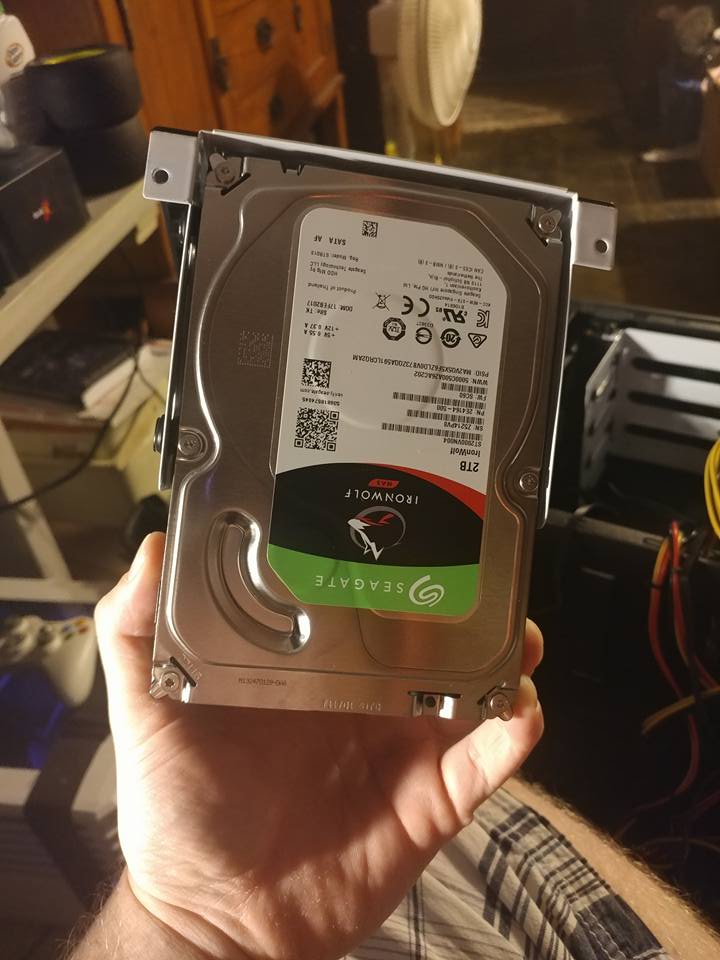
I definitely continued the trend of stupid mistakes when picking drives and determining what kind of drive failure protections I want. I wanted a decent amount of space (for me, at the time) for Linux ISOs, but for some reason I got it stuck in my head that I wanted more, smaller drives than fewer larger drives. In my hours of research, I also read many horror stories about buying drives from the same lot. I ended up spreading my purchases between three retailers. I believe I got them from Amazon, Newegg, as well as in-person at a Micro Center. I ended up with eight 2TB Seagate Ironwolf drives. At the time these were around $80 each.
As for parity, in the aforementioned horror stories, I also read about drive failures and losing all data on the array. I let my paranoia get the best of me and decided on RaidZ3. Knowing what I know now, this was complete and utter overkill, especially given the smaller drive sizes. Sacrificing more drives for parity protection makes more sense with larger drives, due to how long resilvers take. But remember, hindsight is 20/20, and I didn't know this at the time. So, sacrifice 37% of my capacity to parity I did.
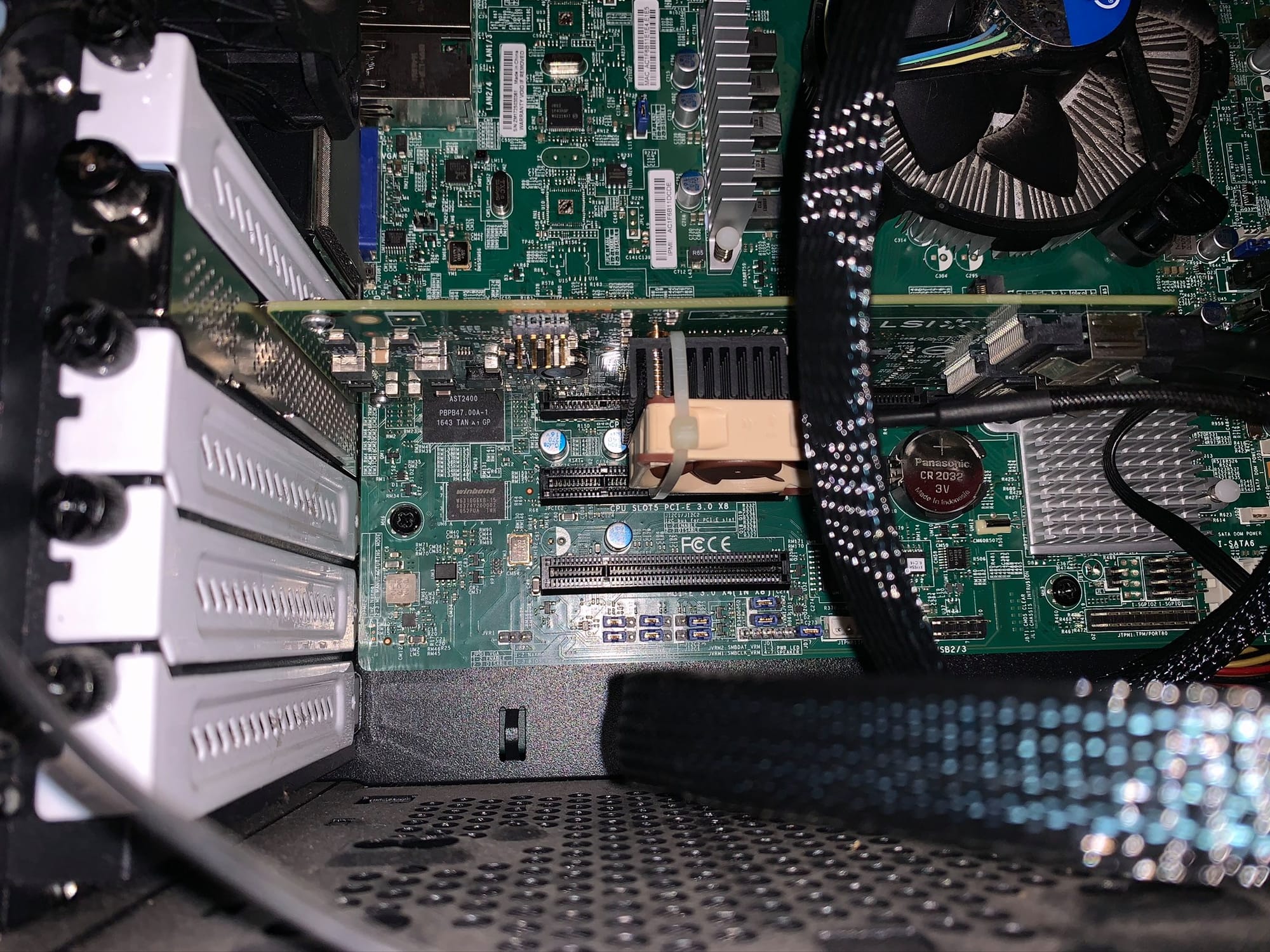
In the end, it served me well for a couple years. It housed all my Linux ISOs, was downloading torrents through a VPN, and just served as a general file server. In 2019 I added an LSI 9207-8i card that I picked up on eBay. I had to learn all about how to flash it to IT mode. I moved all of the drives to this card, which freed up all eight of the motherboard ports for other things. I also added a 40mm Noctua fan to this card (zip-tied, of course) since these things run HOT. They are meant for a high airflow, high static pressure server chassis. Around this time, I also transitioned away from a USB boot drive for FreeNAS to a mirrored pair of Inland 120gb SSDs, mounted in the spots behind the Fractal's front panel.
I realized early on that expanding my array with different sized drives is pretty much impossible with ZFS, at least not while still being able to use the new space. I couldn't expand the array until all eight drives were replaced.
Around 2021 I transitioned to Unraid, and have been using it ever since. Being able to mix-and-match drives was a killer selling point for me. The hardware did change considerably since, but that's for another story time.